Ranciano
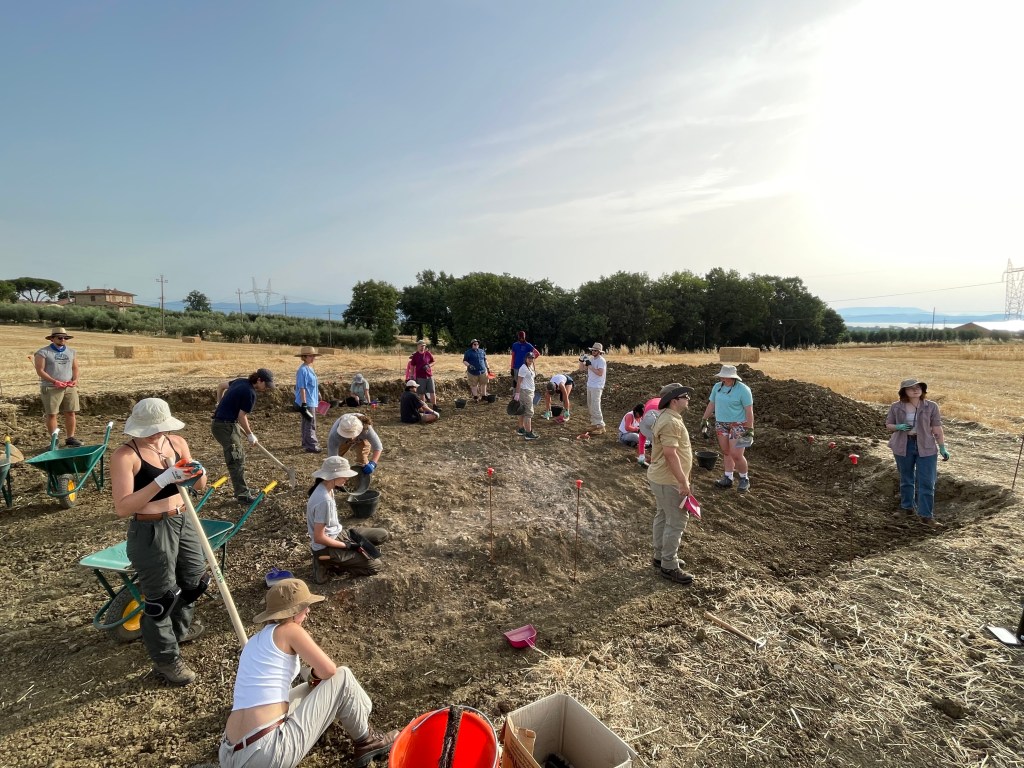
The TRAP team excavated at Ranciano for just one season in 2022. The site is located in an agricultural zone approximately 7.5 km from Castiglione del Lago on a bluff overlooking Lago Trasimeno. The presence of an archaeological site was well-known to local residents. Over the decades, a number of finds had been made in the fields, include the small bronze statue of Cupid wielding a sword. That figure is now in the museum in Castiglione del Lago. Prior to the 2022 season, ground penetrating radar (GPR) conducted on the site indicated at least three areas that appeared to be kilns as well as a potential structure. During the excavation, we explored two of those areas. Although the dig was cut short when we found a WWII munition (fortunately it turned out to have exploded), the site provided some valuable evidence for the Roman and later Medieval occupation of the area.
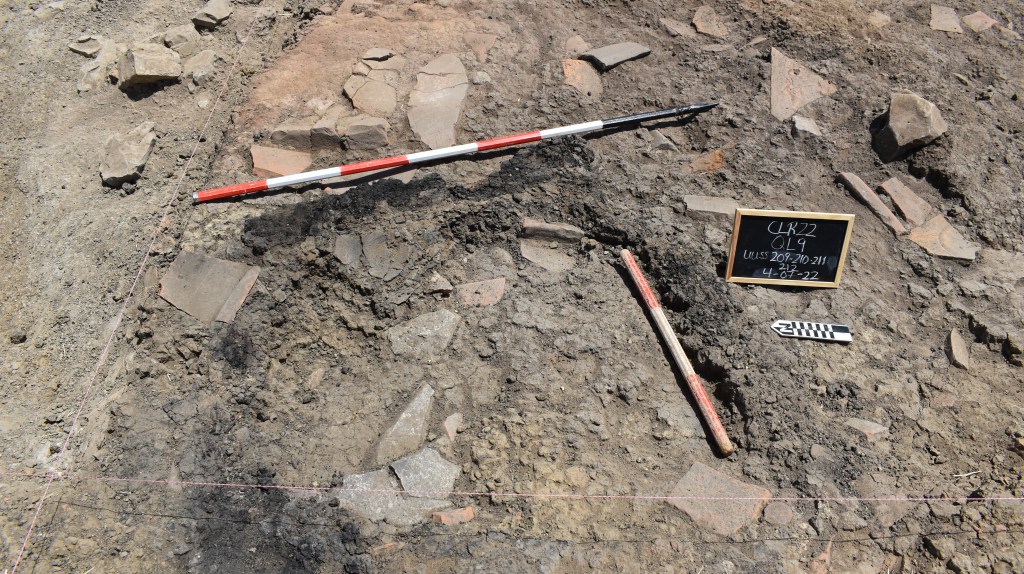
Evidence for Roman activity is based on the presence of ceramics and roof tiles. Those appear to have collapsed from a structure that was destroyed in a fire. The ceramic material is primarily cooking wares and storage vessels. Despite the limited number of excavation days, artifacts and the tiles indicate a domestic setting, perhaps a kitchen.
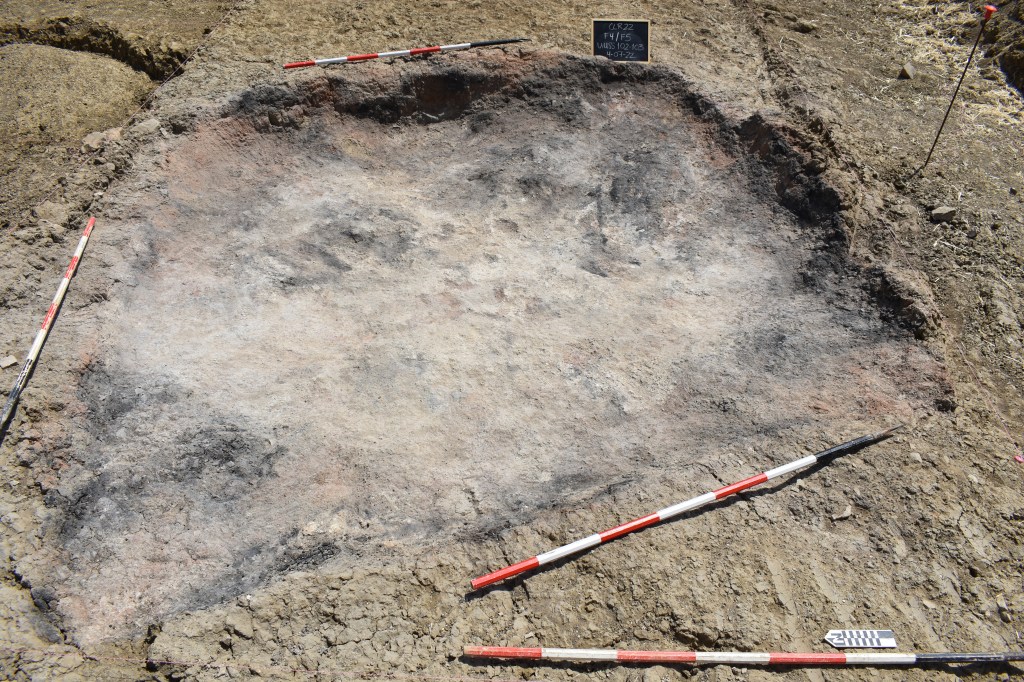
To the south of the Roman remains, the team excavated a Medieval kiln. This is a simple structure, cut into the natural terrain, lined with charcoal, and filled with limestone chips. The whole thing would have been covered with an earthen dome, set on fire, and allowed to burn until the limestone turned to ash. This would have been used to make quicklime, probably for the construction of the Medieval village at Ranciano, which was settled by Perugia in the 12th century.
Unfortunately, excavations at the Ranciano site were cut short when I member of our team encountered a WWII munition just a 20 cm below the surface. This turned out to be the tail fin and part of the shell belonging to a British 4.2″, 20-lb. mortar. Although unexpected (given that the field had been under cultivation since the 1950s), the presence of WWII munitions at Ranciano was not entirely surprising. The Trasimeno Line, the German attempt in summer 1944 to hold off the advancing allies forces, ran right through this field. In June 1944, a fierce battle took place here between Irish forces stationed to the south and German soldiers embedded in the village of Ranciano. For more information on the battle, see the page on our digital museum site: The Battle of Ranciano,

