By Megan John
Scattered throughout the museums located in the Castiglione Del Lago region we have viewed many examples of painted Etruscan poetry. One amphora in particular caught my eye—it displayed a popular scene of Achilles and Ajax playing a board game during a break in the Trojan War (Fig. 1), displayed in the Archaeological Museum of Chiusi. I became curious as to what game they were playing and if any modern games were similar.
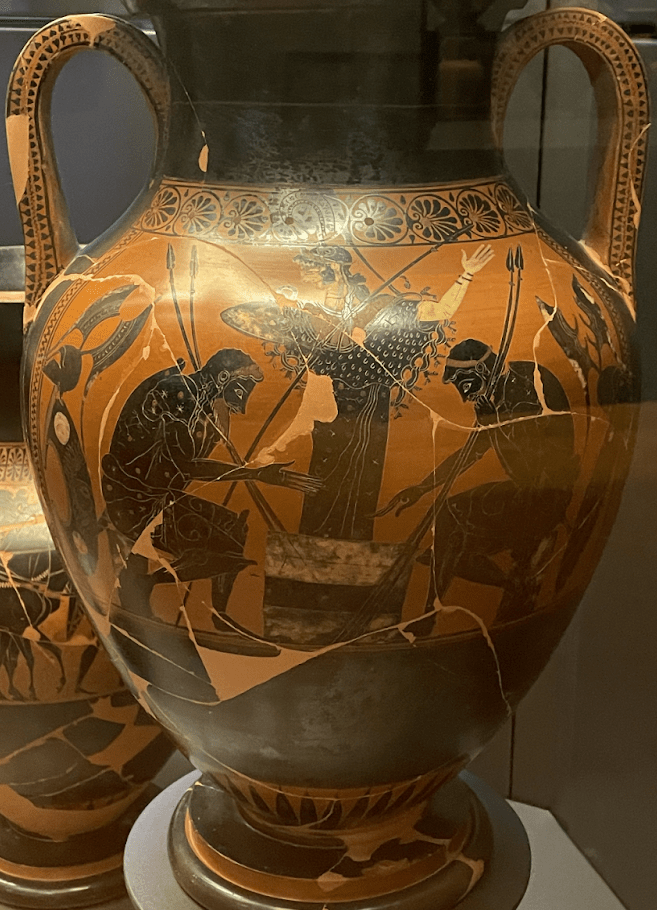
Figure 1: Garner, Tal. Amphora with Scene of Athena Interrupting Ajax and Achilles Playing; Archaeological Museum of Chiusi.
The vase dates to the late Archaic period (ca. 525-500 BC) in the Etruscan timeline. The amphora displays a scene of Achilles and Ajax playing a board game, accompanied by Athena in the background, perhaps interrupting them. The amphora sits on a rotating display that gives visitors access to all sides of the amphora, allowing them to view and interpret both sides. The display label has little description, leaving the scene up to the public’s interpretation. This lack of context and content could inhibit the public’s understanding of the artifact, as they may not be equipped with prior knowledge about the Greek art or stories displayed, or their value and importance to Etruscan life.
Mark Hall explains well the significance of the scene. Achilles and Ajax act as opposites throughout the Iliad; Ajax is a model defensive warrior, and Achilles is the perfect offensive combatant. Despite being opponents, together they form the perfect soldier, compensating for each other’s weaknesses. Both Achilles and Ajax fight for the title of the greatest warrior of the Greeks (ultimately won by Achilles). With this in mind it can be inferred that the game between the two depicts their competitive rivalry, or is a metaphor for the fates of the heroes, as both succumb to death shortly after their game. Achilles and Ajax engage in a game of warfare on the amphora, just as they wage war at Troy in the Iliad (Hall 2019, 209).
While visiting the Etruscan Museum of Chianciano Terme I noticed an artifact display showcasing a game board accompanied by a photograph of the same scene on a different vase than the amphora in Chiusi (Fig. 2). This inspired my curiosity about the game itself. After further research I found this to be a Greek game involving dice, with 10 game pieces (similar to those displayed in Fig. 2), and a five-lined board.
The display was minimally labeled, identifying the artifacts as part of a game similar to that of backgammon and explaining that it was practiced by the Greek heroes during breaks in the Trojan war. The label was void of specific detail, leaving much for the museum goer to understand without context. Given that the image is similar to the one in Chiusi, I believe the visitor to Chianciano Terme is helped in understanding the artifact through the exhibit’s detailed visual of gameplay.
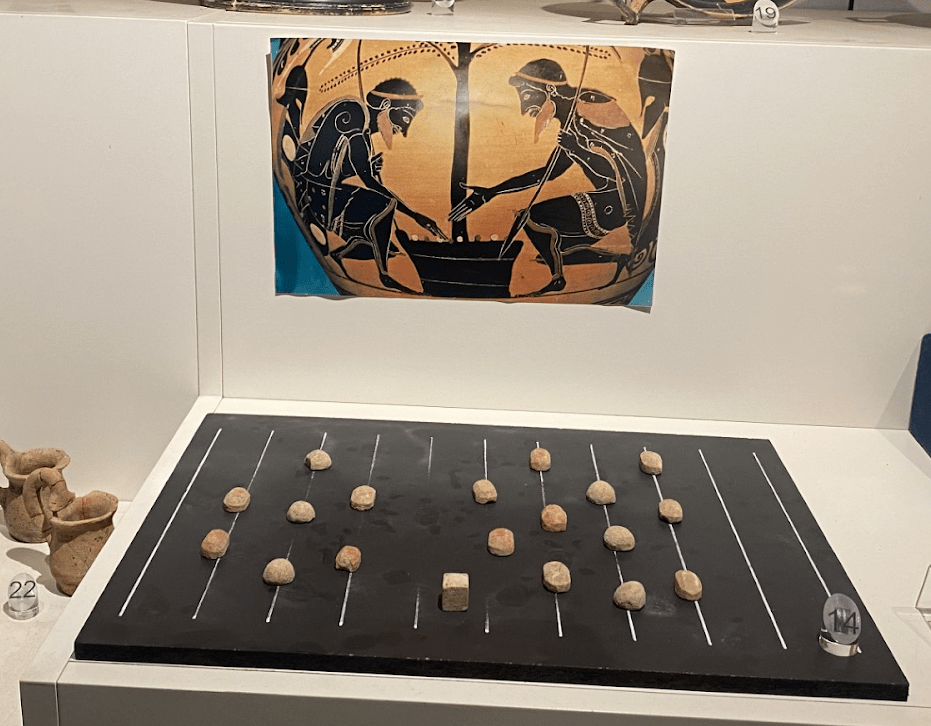
Figure 2: John, Megan. Game Pieces Similar to Those Used by Achilles and Ajax in the Iliad. Museo Civico delle Acque, Chianciano Terme.
Stephen Kidd details the specifics of the game pente grammai, suspected to be the game played by Achilles and Ajax on the amphora in Chiusi. Pente grammai, often referred to as the “holy line” or “five lines,” is a game much like modern day backgammon. It is believed the game consists of a race between the opposing players’ pieces to the middle line, the “holy line.” The game is won by a combination of both luck, in the dice and through strategy, with the element of the game requiring all pieces to be moved in pairs (Kidd 2017, 84). The elements of strategy combined with luck mirror the realities of war, making this game a perfect metaphor for the rivalry of the heroes Achilles and Ajax.
In the depiction shown on the amphora in Chiusi it is not clear who is currently winning the game, as no game pieces are visible. The interruption and halt of the game by Athena shown may symbolize no true end to the match, foreshadowing the deaths of Achilles and Ajax, as neither truly wins the war. Appearing at the game could also be interpreted as an attempt to provide Achilles with wisdom, as she was his mentor throughout the Trojan war. In addition, Athena acts as the goddess of strategy. Looking at some examples of the over 160 vases depicting the same scene, I noticed that the inclusion of Athena was unique to the Chiusi amphora. Perhaps the Etruscan who purchased this vase also believed that there is no true winner in war, or thought higher beings affected the outcomes of wars. Or perhaps they simply liked Athena.
Works cited
Carver, Chad. “Ἕρκος Ἀθηναίων: The Ajax Myth, the Trojan War, and Civic Ideology in Fifth-Century Athens.” PhD diss., 2018.
Hall, Mark A. “Whose Game is it Anyway? Board and Dice Games as an Example of Cultural Transfer and Hybridity.” Archimède: archéologie et histoire ancienne 6 (2019): 199-212.
Kidd, Stephen. “Pente Grammai and the ‘Holy Line’.” Board Game Studies Journal 11, no. 1 (2017): 83-99.
 TRAP
TRAP 
Leave a comment