Aidan Mooney
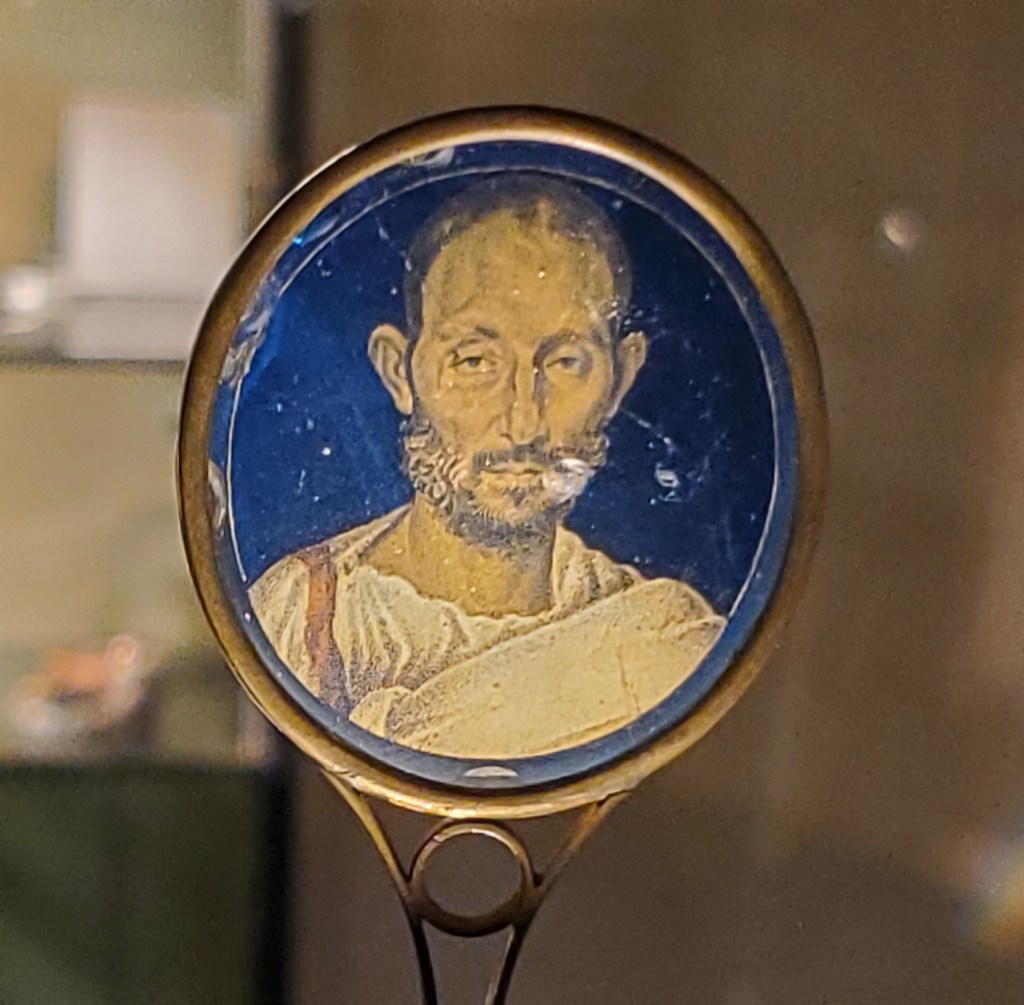
When we visited the Archaeological Museum during our trip to Arezzo, I was struck by a certain small object: a glass medallion, the bottom of a vessel, with a portrait made of thin layers of gold leaf between discs of glass. It and other extant examples of this technique, a method that dates to the Hellenistic period, tend to date to between the third and fifth centuries AD, during the later period of the Roman Empire (Lutraan 2006, 2).
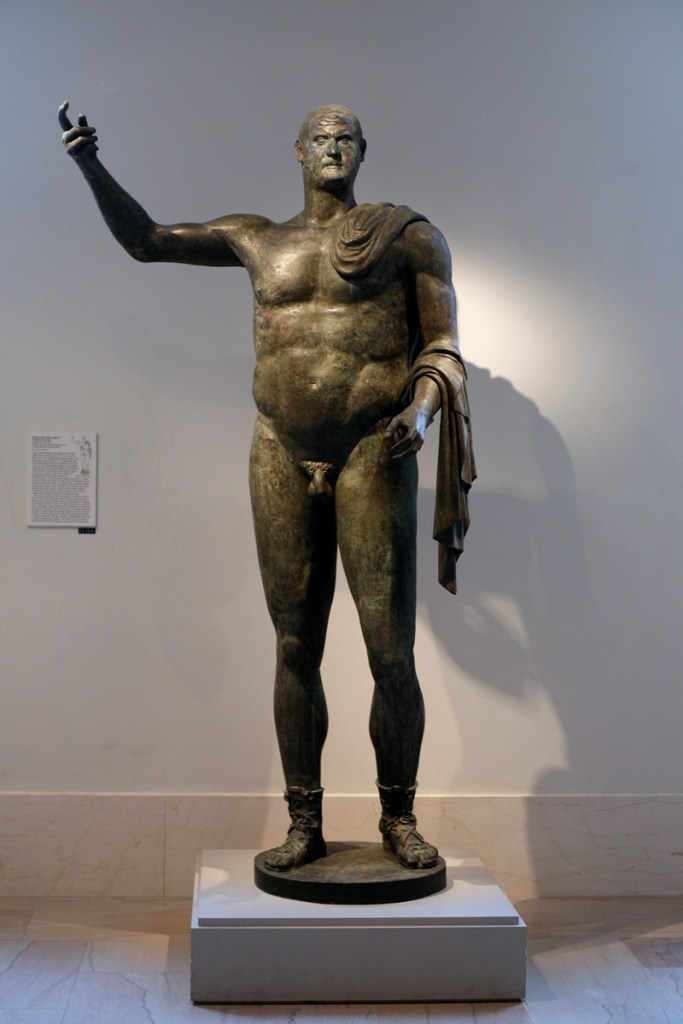
Part of what caught my attention is the stylistic difference between this small art object (not even five centimeters in diameter) and other pieces being made around the same period. Compared to the image of emperors in large public pieces, such as the statue of Trebonianus Gallus at the Metropolitan Museum in New York, this medallion shows a more personal, intimate view of an anonymous individual, one that seems more naturalistic compared to the public aggrandizement of Gallus and other emperors of this period. It is not certain what purpose these medallions might have served (Lutraan 2006, 6).
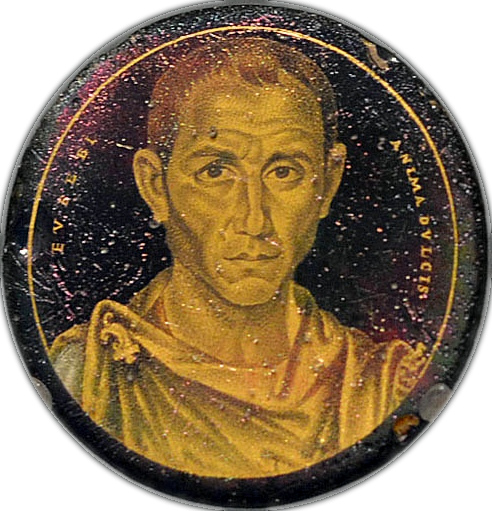
Another part of this piece that made a mark on me was the fine detailing of the craftsmanship. As someone with experience making art, specifically metalworking, the gold glass portrait displays a level of precision that amazed me. Though relatively few such portraits survive, the small handful that do all show a similar degree of naturalistic precision that made me wonder how something so tiny and detailed could have been made without modern tools and techniques.
The answer, as it turns out, was with a lens! It seems obvious in our modern mindset to use a lens for details, but the period of the gold glass’ creation was prior to the advent of the widespread use of magnification that came over a thousand years later. Despite this, there are examples of lenses from antiquity that could provide up to 11x magnification, and tools like these may have been available to the craftsmen who made these glass pieces (Sines and Sakellarakis 1987, 194).
I find that the less I underestimate the people of the past, the more prepared I am to learn about them. This discovery reminded me of the discussion on the Ranciano site regarding the temperature at which limestone must be burned to create lime, and how many of us were surprised at how hot the kiln must burn (900-1000° C). Learning that Roman lenses were capable of facilitating this kind of craft shocked me in a similar manner.
The things that fascinate me most about both this style of craft and our archaeological work are the same: we are looking at pieces of Roman history that are likely not associated with the governmental power structures; we are investigating everyday people. While it is beyond doubt that the people who commissioned these gold glass pieces were wealthy, I think the way they portrayed themselves in art establishes more of a connection with a modern audience than any Imperial bust.
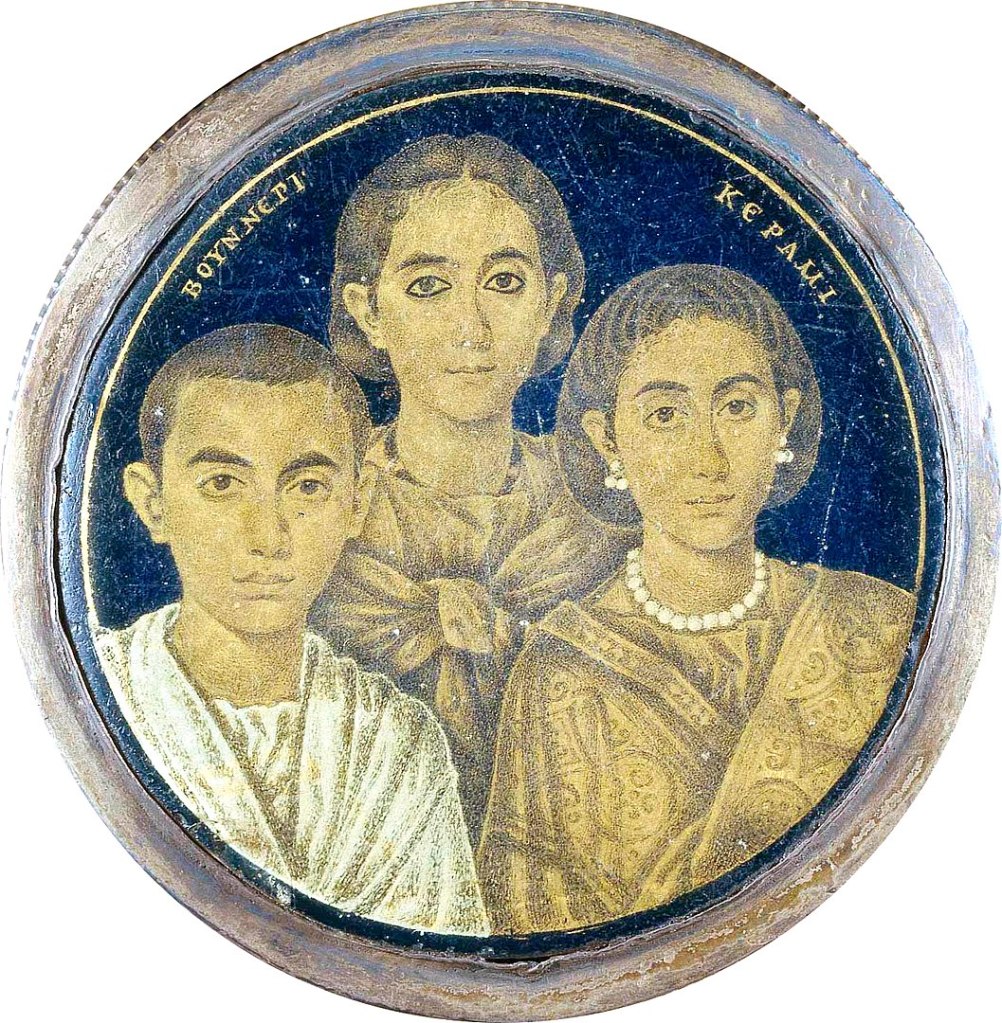
To me, viewing such pieces creates an alternative way to think about the flow of Roman art history. It does not always follow the neat progression from the more naturalistic Republican periods to the increasingly idealized Imperial periods that I learned about in my art history courses, and neither is all the technology I associate with the modern world a modern invention. These artworks are something of an exception at a time when a great deal of art served the emperor in some fashion, and these exceptions in formulae are important for me to find because individuals can seep through those cracks and make themselves known after well over a millennia and a half, though we may hardly know more than a name and a face.
Works Cited and Consulted:
Lutraan, Katherine L. “Late Roman Gold-Glass: Images and Inscriptions.” MacSphere, McMaster University, 2006. http://hdl.handle.net/11375/10287
Sines, George, and Yannis A. Sakellarakis. “Lenses in Antiquity.” American Journal of Archaeology 91, no. 2 (1987): 191–96. https://doi.org/10.2307/505216.
Weitzmann, Kurt. “The Late Roman World.” The Metropolitan Museum of Art Bulletin 35, no. 2 (1977): 2–96. https://doi.org/10.2307/3259887.
 TRAP
TRAP 
Leave a comment