Until mid-June it was unusually cool in Italy. But as the sun began to come out, the spring rains dried, and a horrible buzzing sound began. Not the innocent din of pollinating bees, but the snarl of mosquitoes.
Mosquitoes have been interacting with humans for thousands of years. Some theories suggest that they co-evolved with humans after preying primarily on other primates. Regardless of their origin, there is genetic evidence for the coevolution of malaria with humans (Hill et. al 1997). While historical genetic records are not available to modern scientists, there is evidence of malaria in the ancient Mediterranean world. Our archaeological dig site in the Chiana river valley has many similarities with the Tiber River valley which has historically fostered a mosquito problem in Rome. This manifested as “Roman Fever,” another name for the strain of malaria specific to the Mediterranean and Africa known as Plasmodium falciparum (Miller). The term mal’ aria, which translates to “bad air” (Wrigley), shows that the Romans lacked an understanding of the disease. Malaria is actually caused by a parasite inside the mosquitoes that enters the bloodstream through their saliva as they suck out blood. The disease killed 429,000 people in 2016 (World Health Organization).
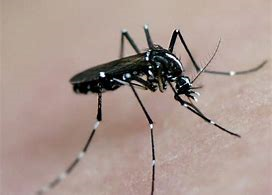
Recently discovered evidence suggests that malaria was a contributing factor to the stressors that collapsed Rome. Certain DNA markers can be detected in bones from malaria victims buried in Roman cemeteries. Bones have to be in sufficiently good condition to perform specific disease-based DNA analysis, so it was not until the late 1990s that DNA evidence for malaria in Italy was detected, beginning with bones testing positive for malaria at excavations in Lugnano (Soren). Since malaria came from Africa, it is suggested that it spread through trade routes that led to Rome (Thompson). DNA in teeth from the 1st-3rd century CE discovered in 2000 at three Roman-period sites across Italy also provide concrete evidence for malaria (Miller). Because there are no clear historical records of the disease, it is hard to estimate effectively its impact on the Roman Empire. However, knowing that the disease was present has important implications for all of Italy, including the Chiana river valley in Etruria.
We do not yet have direct evidence of malaria in the ancient Chiana river valley, but similar conditions to the Tiber suggest its plausibility. Due to their close proximity, both rivers had similar topography. Small hills along the rivers would have helped to create areas of standing water that are excellent breeding grounds for mosquitoes. The Chiana underwent a long process of draining between 1500 to 1840; prior to that it was a swampy area that was nearly uninhabitable during the middle ages (Platner). Accumulation of standing water also resulted from frequent flooding of the Tiber. Pools of water near the capital would cause the mosquito population to bloom.
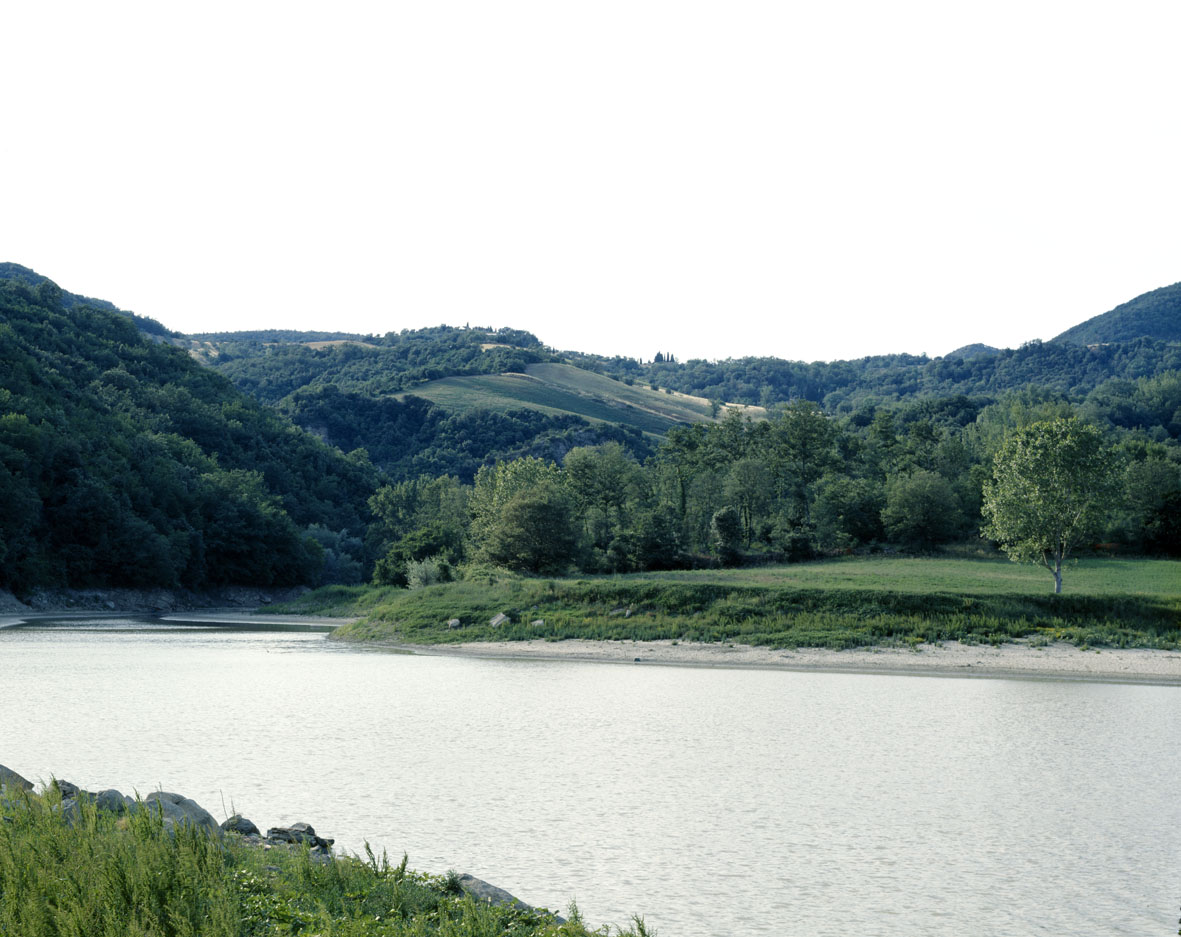
- Image of the Tiber River Valley from visitodi.eu.
- Topographic Map of Italy from Shutterstock
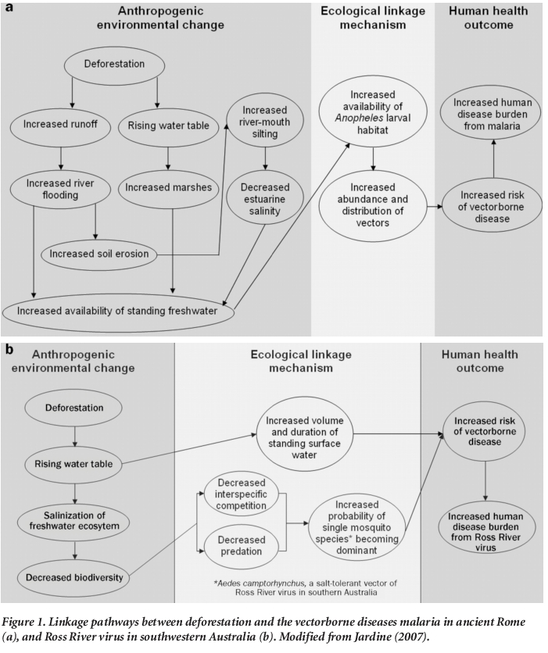
This figure from (O’Sullivan et. al 2008) illustrates a basic model for anthropogenic impact on mosquito populations that are compare ancient Rome with the Ross River in Southwestern Australia. The two main mechanisms essentially rely on increased standing water leading to larval development and decreased biodiversity increasing mosquito susceptibility to parasites as well as decreasing predators.
Recent research has suggested that deforestation and water development such as irrigation and dam-building along with soil salinization can greatly increase mosquito populations. Both the Etruscans and Romans engaged in extensive water engineering projects (irrigation, bathhouses, aqueducts, etc.), so a comprehensive study may someday be able to illustrate how malaria may have adversely affected their social and economic systems.
Because both Rome and Etruria invested heavily in agriculture and modified their river systems, both civilizations may unintentionally have increased the levels of mosquito breeding. New agriculture enabled by deforestation would have increased soil run-off into water systems, slowing down and stopping up drainage (O’Sullivan). Modifying the Chiana River valley could also have caused mosquito predators to die or migrate. Irrigation systems often increase soil salinization, which can drive off mosquito predators. Because mosquitoes have relatively quick life cycles, population blooms after rain may have left insufficient predators to trim their numbers. With widespread trade linking Italy to other Mediterranean shores and beyond, it is likely that malaria was widespread.
Despite the welts covering each of us at the end of each day, no one on our trip has gotten malaria. However, the widespread danger of this disease even in the age of modern medicine shows how large of an impact this disease could have had on the Chiana river system and upon the occupants of the villa that we are excavating.
Bibliography
Hill, Adrian V. S., Annette Jepson, Magdalena Plebanski, and Sarah C. Gilbert. “Genetic Analysis of Host-Parasite Coevolution in Human Malaria.” Philosophical Transactions: Biological Sciences352, no. 1359 (1997): 1317-325. http://www.jstor.org.duproxy.palni.edu/stable/56590.
Miller, Mark. “Researchers Find Evidence for Deadly Malaria in Imperial Rome 2000 Years Ago.” Ancient Origins. December 07, 2016. Accessed June 10, 2019. https://www.ancient-origins.net/news-history-archaeology/researchers-find-evidence-deadly-malaria-imperial-rome-2000-years-ago-021101.
O’Sullivan, Lara, Andrew Jardine, Angus Cook, and Philip Weinstein. “Deforestation, Mosquitoes, and Ancient Rome: Lessons for Today.” BioScience58, no. 8 (2008): 756-60. doi:10.1641/b580812.
Platner, Samuel. Tiber River. Accessed June 10, 2019. http://archive1.village.virginia.edu/spw4s/RomanForum/GoogleEarth/AK_GE/AK_HTML/GF-019.html.
Soren, David. A Roman Villa and Late Roman Infant Cemetery at Lugnano in Teverina, Italy L’Erma Bretschneider, 1998.
Thompson, Andrew. “History – Ancient History in Depth: Malaria and the Fall of Rome.” BBC. February 17, 2011. Accessed June 10, 2019.
“Val Di Chiana.” Val Di Chiana Valdichiana Tuscany Italy. Accessed June 10, 2019. https://www.val-di-chiana.com/.
World Health Organization, “10 Facts on Malaria,” December 2016. https://www.who.int/features/factfiles/malaria/en/
Wrigley, Richard. “Roman Fever: Influence, Infection and the Image of Rome, 1700-1870.” Choice Reviews Online51, no. 03 (2013). doi:10.5860/choice.51-1289.
Photo 1
Fox, Jesse. “Dengue in Northern Italy?” TreeHugger. October 11, 2018. Accessed June 10, 2019. https://www.treehugger.com/green-food/dengue-in-northern-italy.html.
Photo 2
Tiber River Park. Accessed June 10, 2019. http://www.visitodi.eu/il_parco_fluviale_del_tevere-0-155.htm.
Photo 3
“A Map Showing the Topography of Italy. Largest Towns, Rivers, and Provinces Are Labeled. Elements of This Image Furnished by NASA.” Shutterstock.com. November 09, 2013. Accessed June 10, 2019. https://www.shutterstock.com/image-photo/map-showing-topography-italy-largest-towns-162133013.
Photo 4
O’Sullivan, Lara, Andrew Jardine, Angus Cook, and Philip Weinstein. “Deforestation, Mosquitoes, and Ancient Rome: Lessons for Today.” BioScience58, no. 8 (2008): 756-60. doi:10.1641/b580812.
 TRAP
TRAP 
Leave a comment