The students are here but the weather is not cooperating.
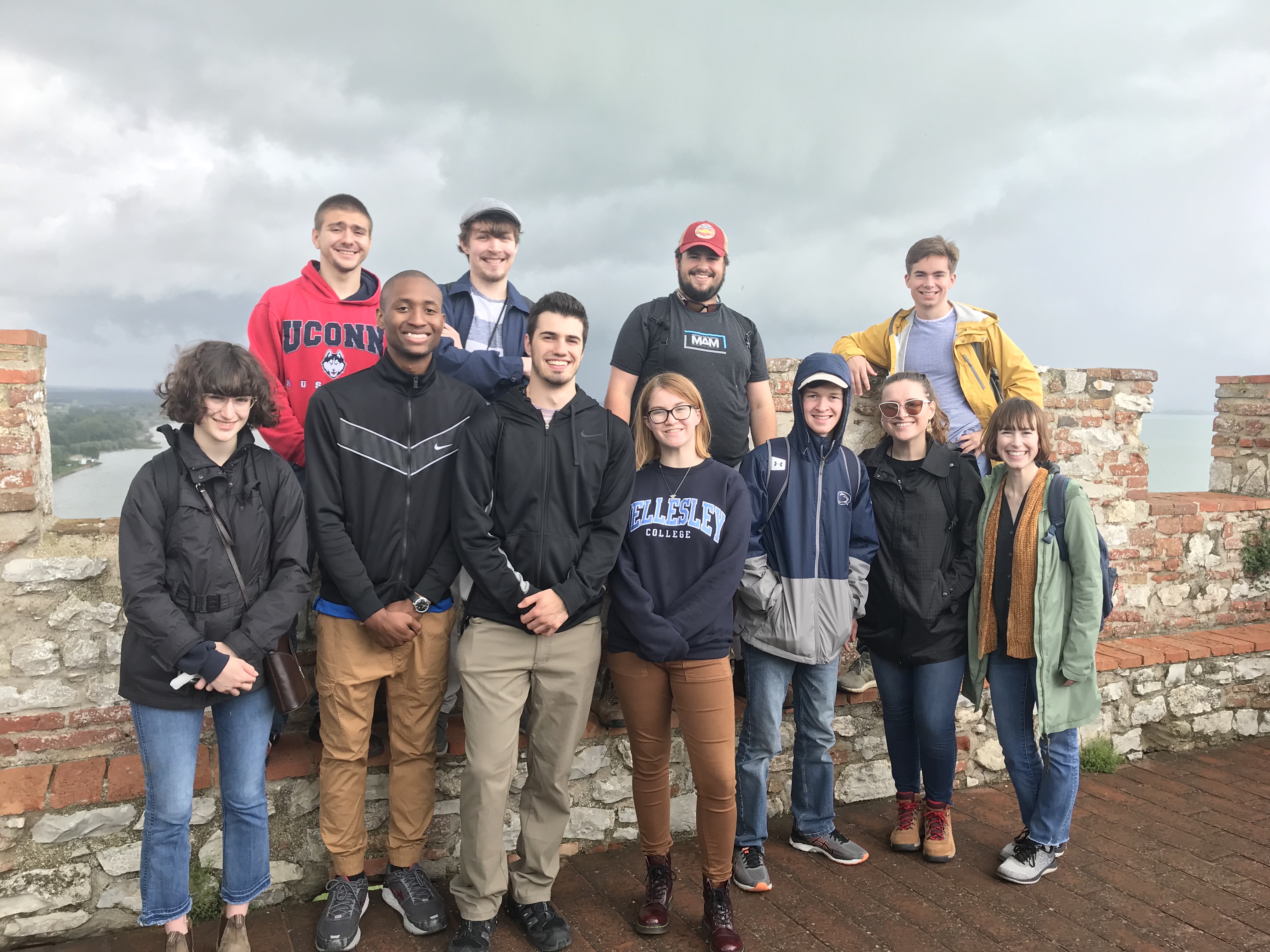
We have arrived in Castiglione del Lago for our fifth season of fieldwork at the Vaiano-Gioiella villa site. Eleven students from schools across the U.S. have joined us this season. Unfortunately it has rained continuously this week and the site is completely soaked; we hope to begin excavations early next week. In the meantime, the students are attending classroom sessions on archaeological method, museum studies, and the history of Umbria from the Etruscan era through the Roman Empire. We have also organized a field trip to Chianciano Terme and Chiusi.
When we do get out to the site we have several goals for this season. On the lower terrace we have now identified three rooms of a bath complex, at least two of which had a hypocaust system for heating the floors and walls. This season we will expand the excavation of the bath complex to the east to determine the size of the apsidal room (Room 2) first identified in 2017 and perhaps to locate the furnace that would have provided the hot air for the hypocaust.
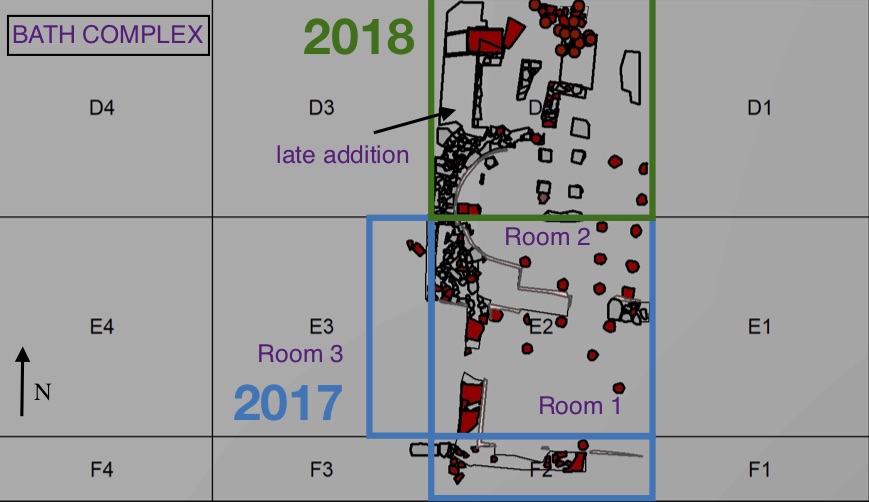
The bath complex appears to be the earliest construction on this part of the site and may date to the 1st century BC. To the north and west of the apsidal room (Room 2) there is evidence of later construction, perhaps related to some kind of industrial work. To learn more about this, we plan to expand the excavation to the west. Ultimately we plan to connect the excavation of the lower terrace with the Central Area.
In the Central Area, we plan to continue the excavation of the two squares from 2018, A6 and A7, where at the very end of the season we found the bottom of the stairs, which were first uncovered in 2017, and a small area of tile floor that is cemented into what appears to be a cocciopesto basin. This certainly seems to be a processing room, probably for liquids.
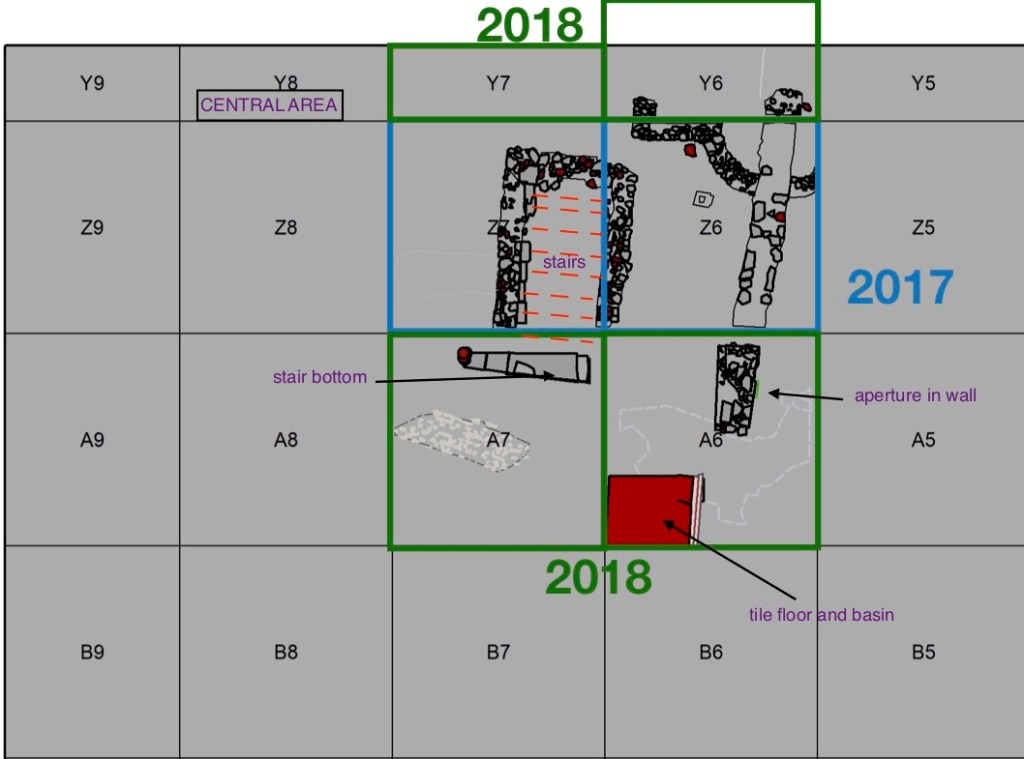
Since the cocciopesto basin appears to be below a cobble and tile wall with an aperture, it is possible that we have a torcularium, a Roman wine press. The aperture would have held the wooden beam used to create a fulcrum for pressing the grapes and the liquid would have run into the basin. To the north of the stairs we appear to have virgin clay, thus this season in addition to re-opening squares A6 and A7, we will expand excavations to the south and work in B7.
In addition to excavation, this year we will begin a study of the coarse ware ceramics from the villa. We have identified a variety of fabrics that were used in the production of the coarse wares. Prof. Jim Mills from DePauw University will be joining us for three weeks to make thin sections of the fabrics for analysis. We will also continue our photogrammetry program. For a taste of that project, please check out our Digital Site Museum.
Check back here for updates throughout the season.
 TRAP
TRAP 
Leave a comment