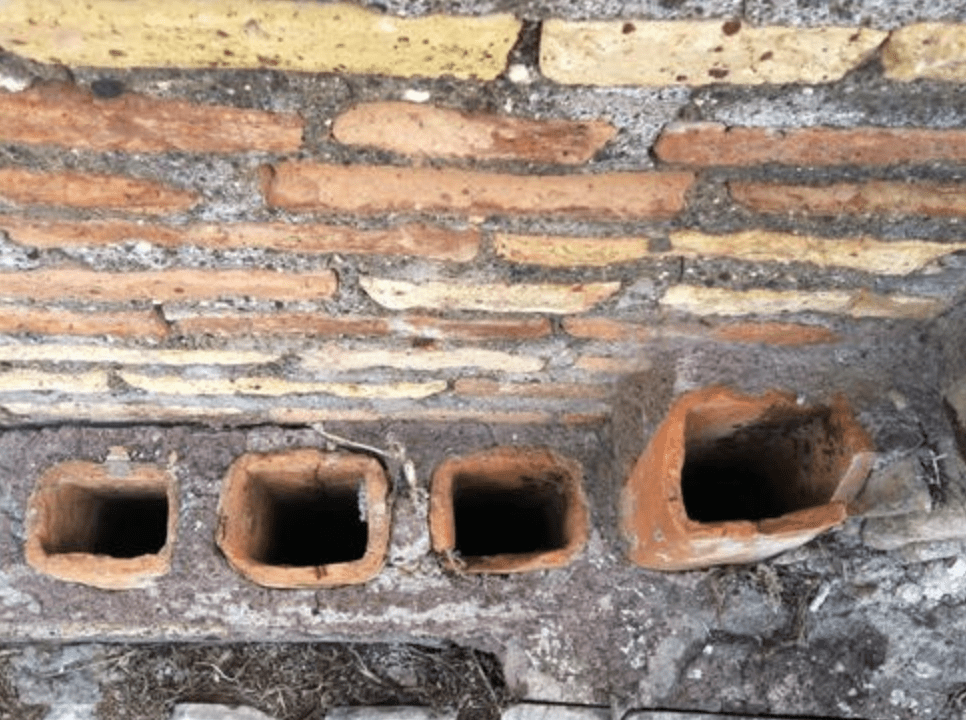
As a member of trench D2, I have learned A LOT about Roman bathhouses in the past couple of weeks. Trench D2, located on the eastern side of the dig site, has revealed itself to be the location of the bathhouse in our villa. We know this for several reasons: first, we are finding massive amounts of construction debris, which tells us that there was definitely a building there. Next, we are also uncovering tons of broken tubuli. Tubuli are hollow rectangular tubes “which carried the hot air provided by the furnaces” (Cartwright 2013). Finally, we have also found several examples of pilae, which are pillars that held up the raised floor (suspensurae).
 Example of pilae and the suspensurae (image credit: Mark Cartwright)
So how exactly did heating the bathhouse work? It’s actually very ingenious. The Romans used an under-floor heating system (the hypocaust system). An underground furnace sent warm air all throughout the suspensurae and warmed both the floor and the baths. The walls provided heating from the tubuli. Furthermore, Roman bathhouses were typically positioned in a way that allowed southern sunlight to pass through the windows so that the rooms could be heated naturally as well. Since our villa was occupied from the late 2nd century BC through at least the 3rd century AD, the bathhouse probably underwent some changes as new technology came about.
Typically, Roman bathhouses included several rooms that had various purposes. The frigidarium was the cool room and was unheated, the tepidarium was the warm room and was indirectly heated, and the caldarium was the hot room where the heating system was located. At larger bathing complexes, several more features were also common; for example, exercise rooms (palaestrae), open-air swimming pools (natationes), toilets, libraries, and outdoor gardens (Trueman 2015).
An example of one of these larger bathing complexes is at Pompeii: the Stabian Baths. I had the fortune of visiting and seeing a massive bathing complex first hand. Of course, much of it is in ruins, but it is still amazing to imagine what it would have been like when it was in full swing. It would have been full of life, a great place to socialize, and beautifully decorated with sculptures, paintings, stucco, and mosaics.


Bathing was a major part of Roman life and culture. Therefore, bathhouses were extremely important socially, politically, and economically. Public baths acted as business and trade centers because of all the socialization going on through both athletic activities in the gymnasium and intellectual activities in the libraries. Politically, elaborate bathhouses had the opportunity to show off the wealth and power of Rome and its sponsors. Economically, large-scale bathhouses had the ability to employ large amounts of workers during their construction and operation.
However, the bathhouse at our villa was not public. Despite its privacy, it likely operated in its social, political, and economic functions on a lesser scale. It still would have been a place for members of the household to socialize with guests, and the complexity of the rooms still depicted their wealth. On our site, we are finding examples of painted walls (no statues yet), and are getting a better sense of the wealth of the owners of the villa.And we do have a fragment of the mosaic floor.
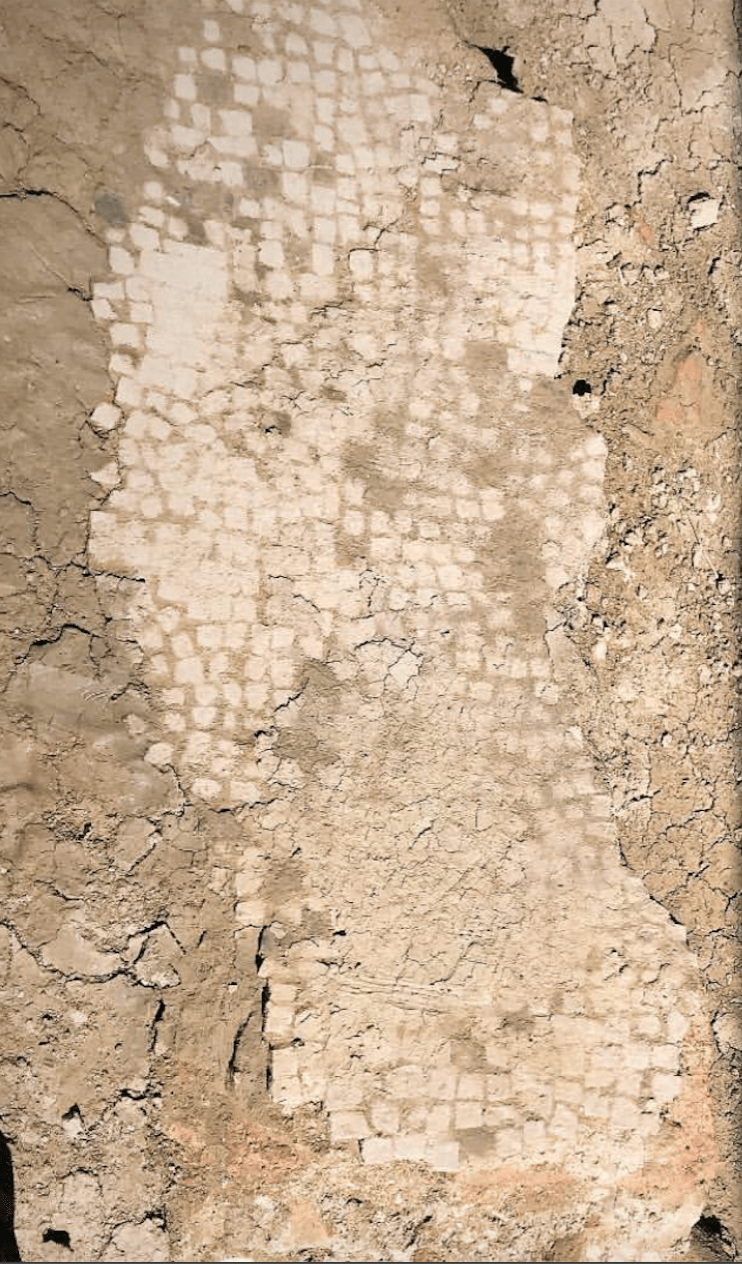
Mosaic floors are common in Roman bathhouses. So far, in the bathhouse area, we have only found white, black, and grey tesserae. A tessera is a small square of stone, tile, glass, or other material that is used to make up the mosaic. So far, we have one fragment large enough to tell the pattern of our mosaic floor–it is a geometric design, a black and white checkerboard.
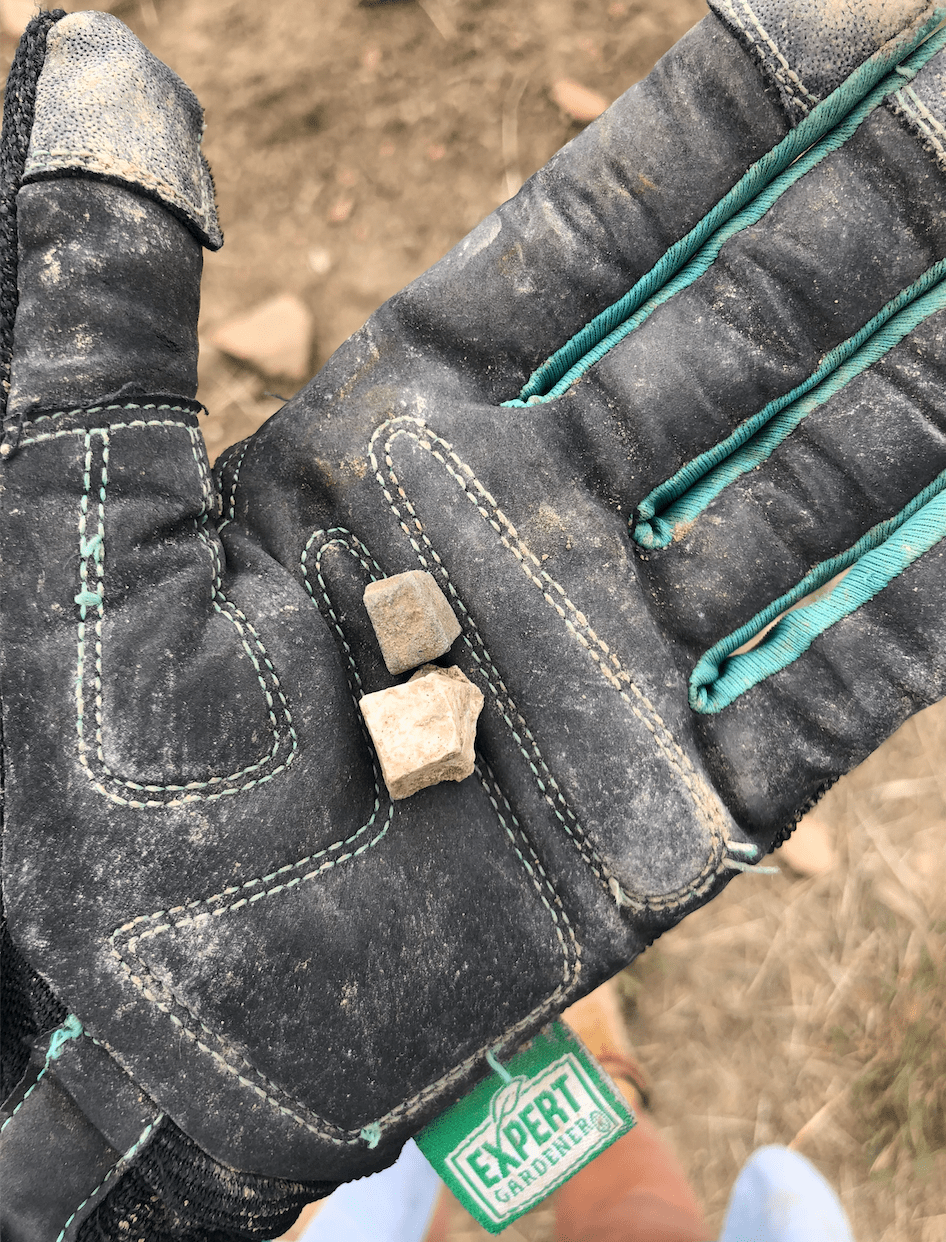
Overall, bathhouses were extremely important to Roman culture. Whether public or private, they were a key component of the daily routine. I feel so fortunate that I get to work in the bathhouse area of our villa! We’ve found so many amazing examples, and it still is surreal to hold ancient artifacts in my hands. So much is left to be discovered in the short amount of time we have left!
Works Cited
Cartwright, Mark. 2013. “Roman Baths.” Ancient History Encylopedia. https://www.ancient.eu/Roman_Baths/
Kobashigawa, Kelly. 2013. “Time Tested Applications of Solar Energy in Rome.” Engineering Rome. https://engineeringrome.wikispaces.com/Time+Tested+Applications+of+Solar+Energy+in+Rome
Truman, C. N. 2015. “Roman Baths.” The History Learning Site. https://www.historylearningsite.co.uk/ancient-rome/roman-baths/
 TRAP
TRAP 
Leave a comment