After a wet beginning this week (we had to wait out a rainstorm in the shed of the old farmhouse), we were finally able to lay out the new excavation areas and begin digging.
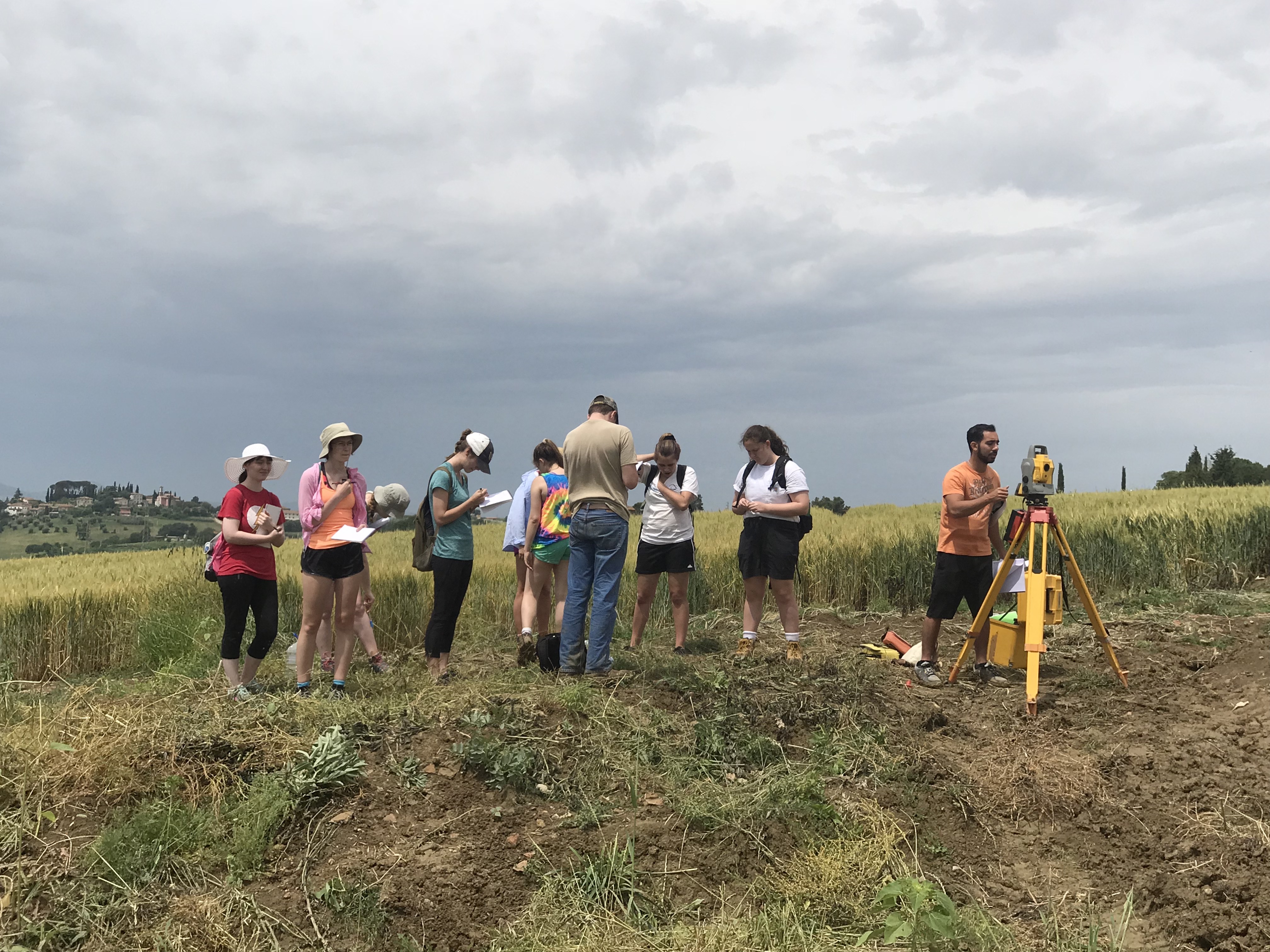
We have two new trenches in the central area, where we are hoping to learn more about the features uncovered in 2017 (see the report posted last week) and reach habitation levels. It is slow going here because the clay fill is difficult to dig. By the end of the week we had completed passes in both trenches. On the north, Y6 has not yielded much of interest yet, but in A7 we can see the remains of a substantial brick and mortar structure that has collapsed on its side, which is possibly part of the Roman terracing.
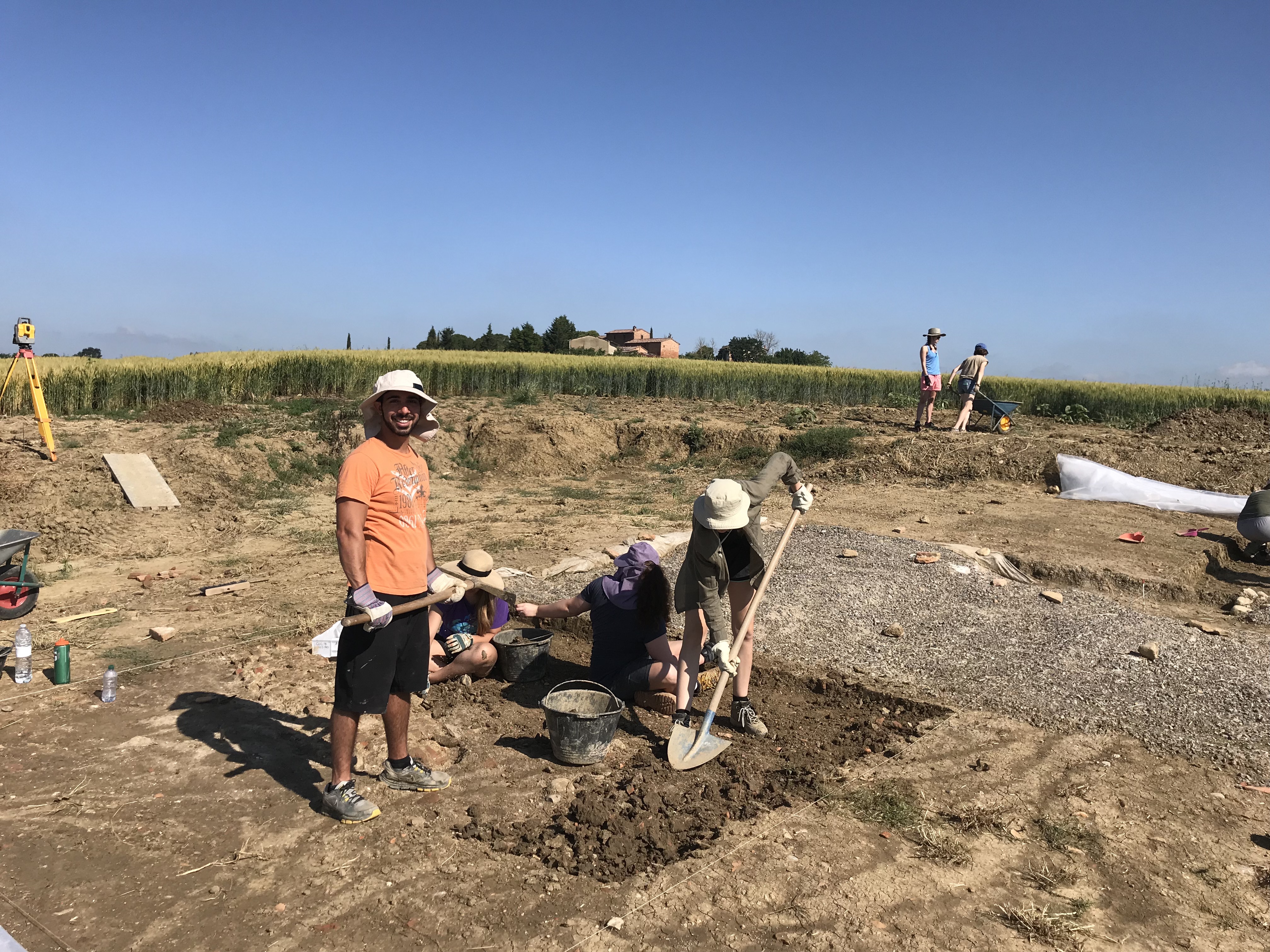
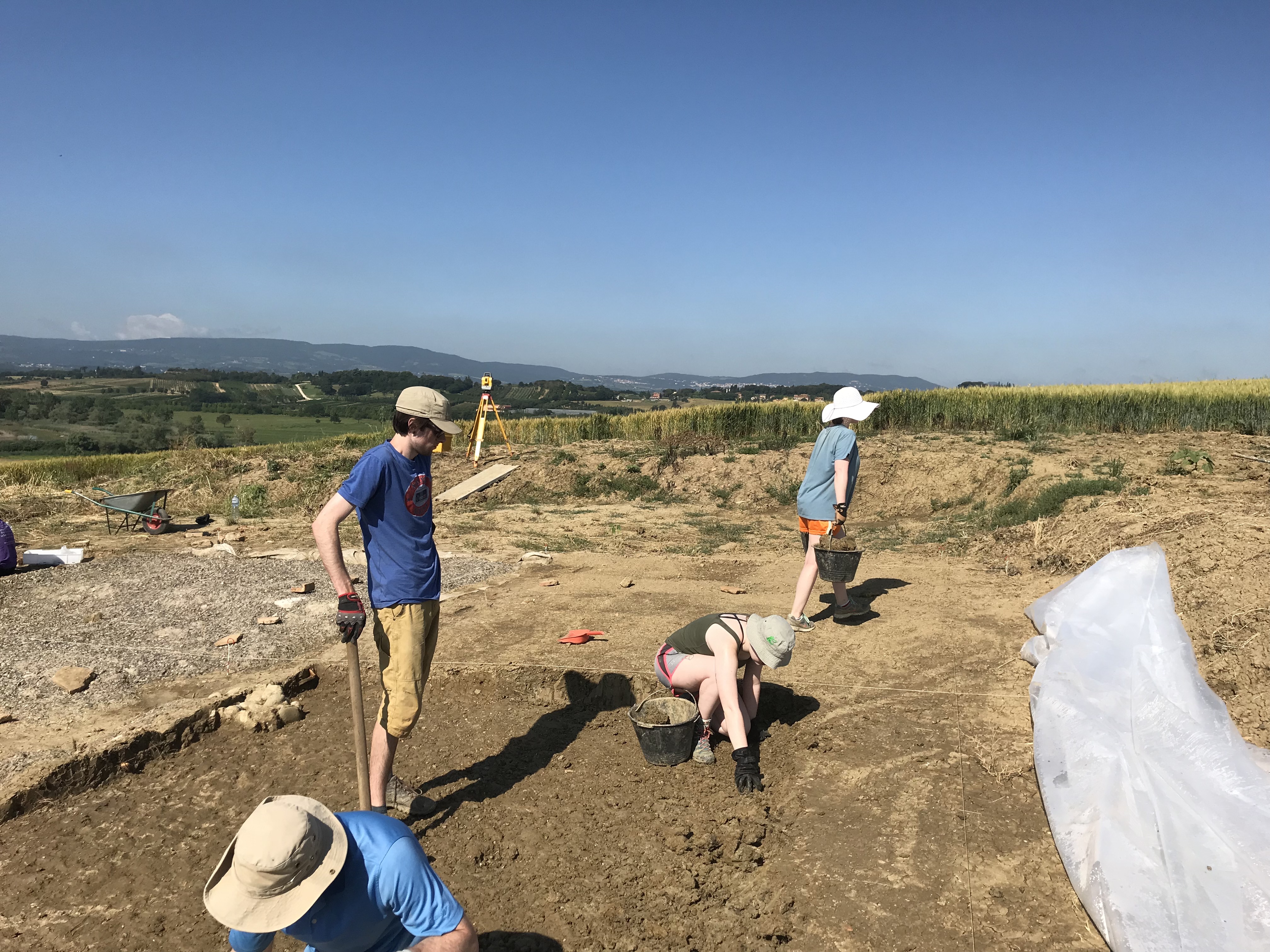
On the lower terrace, where the bath complex is located, we completed one cleaning pass and we can already articulate part of the support structure for the bath continuing to the north. We have a lot more fill to get through!
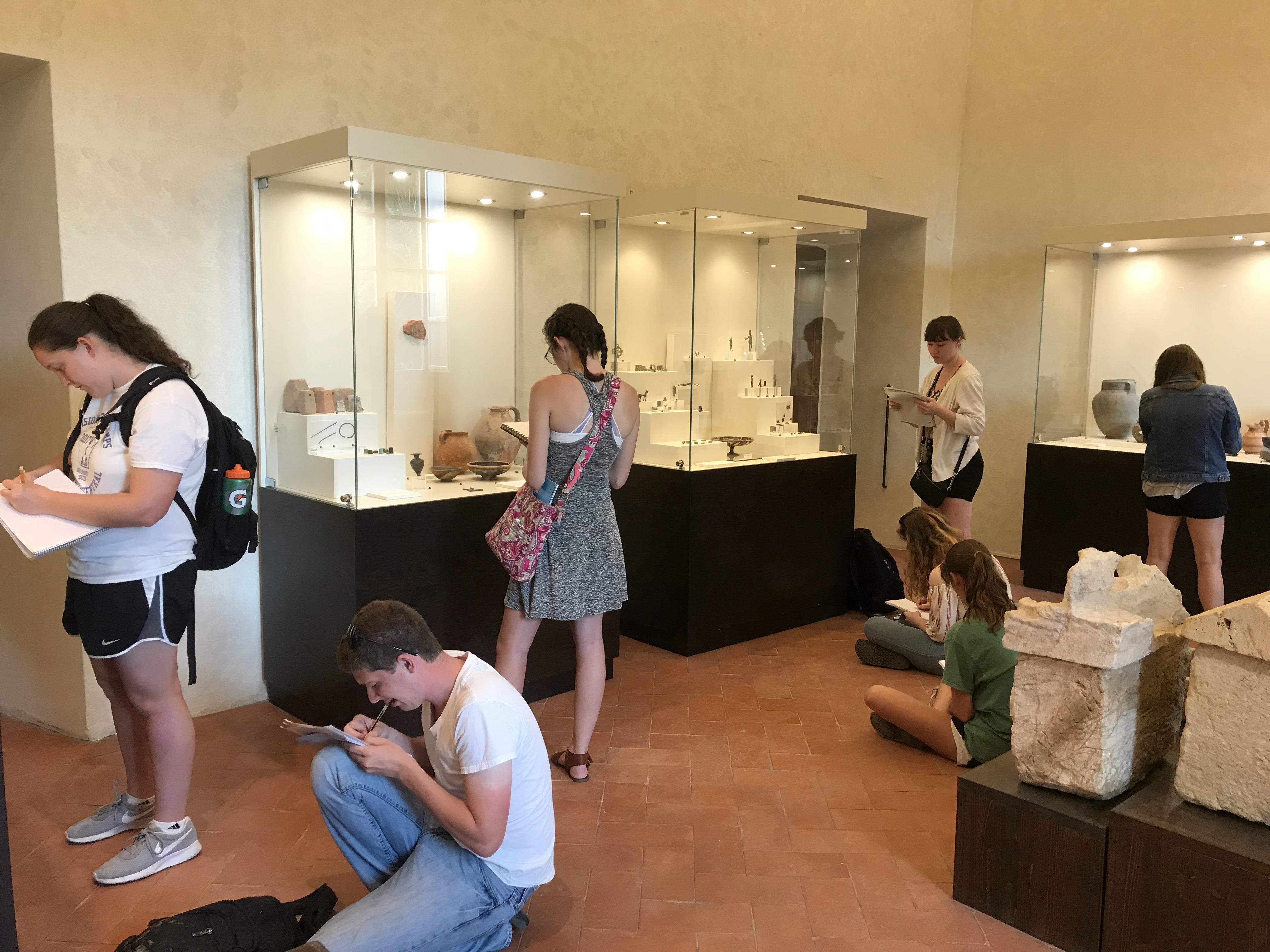
This week we also had several field trips. On Tuesday we began our unit on Museum Studies and spent some time in the antiquarium of Castiglione del Lago where the students practiced drawing objects.
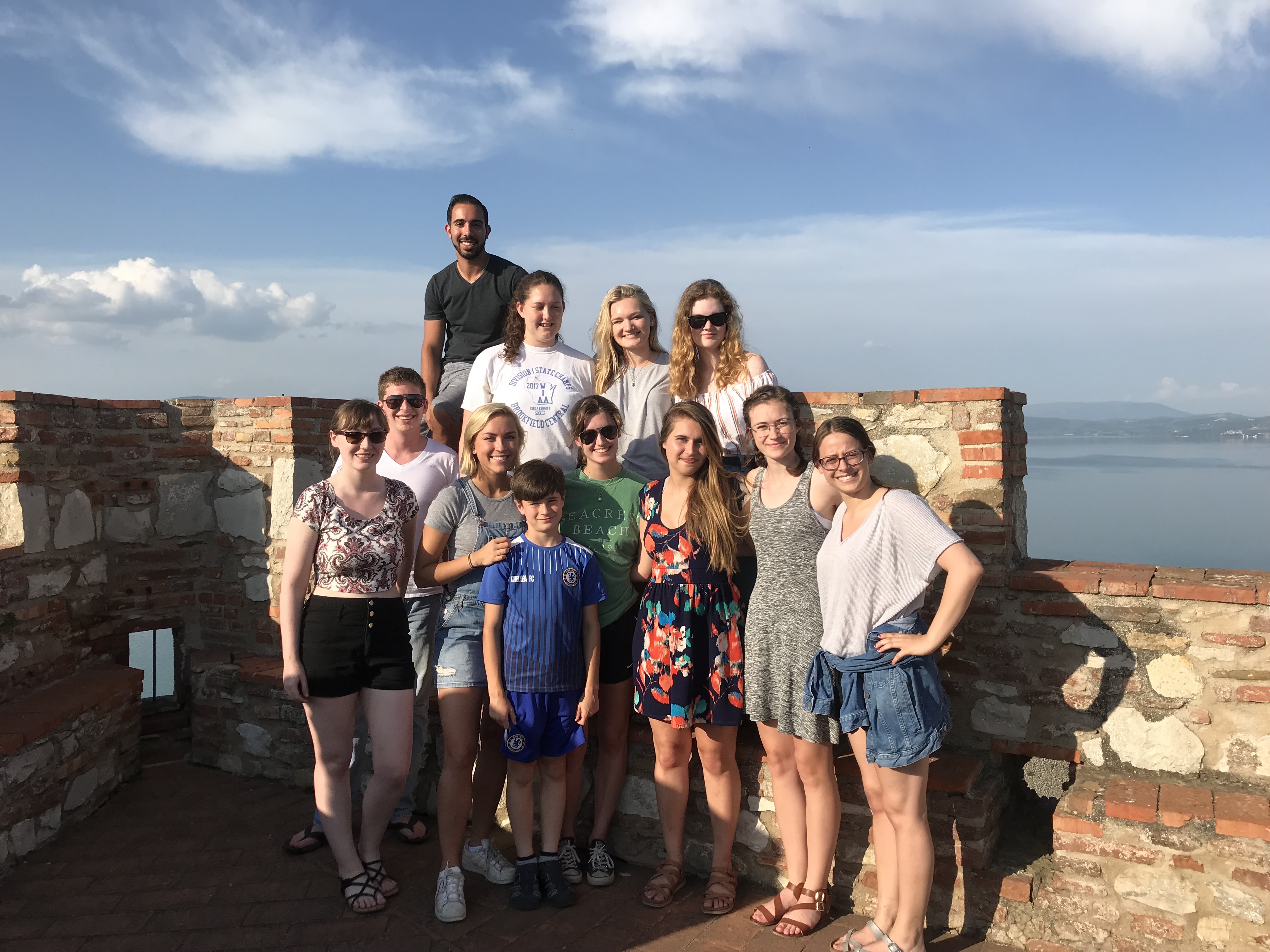
Afterwards we took a tour of the Medieval Fortress (1297):
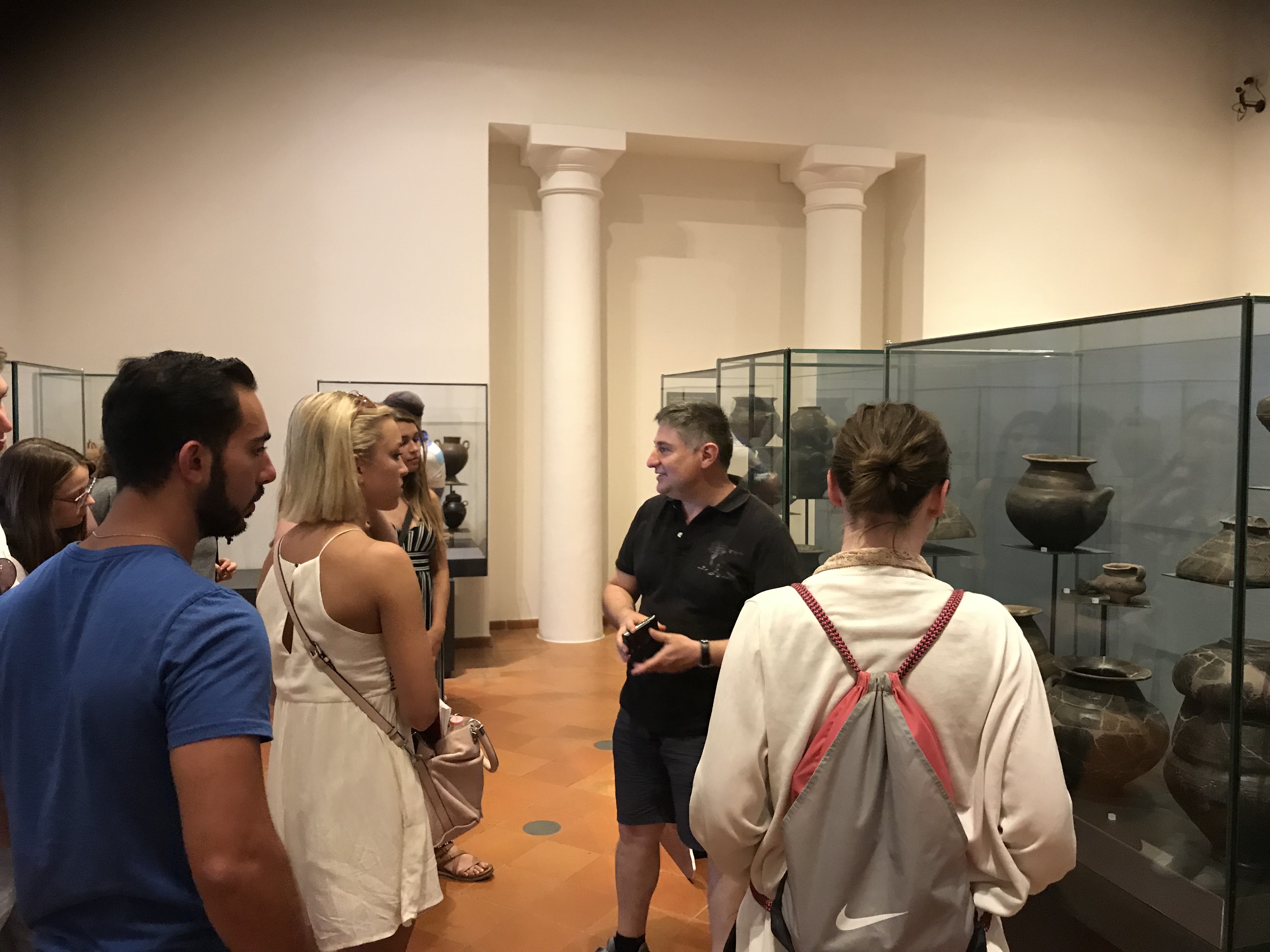
On Saturday we left Castiglione del Lago for a tour of some of the Etruscan sites to the southwest of Lago Trasimeno. We started at the Etruscan tombs at Sarteano, which were excavated in the early 2000’s and are now open to the public (by appointment), including the wonderfully preserved fresco paintings in the Tomb of the Quadriga. We then continued on to the Etruscan Museum in Chianciano Terme. This museum, which is housed in an old palazzo, displays the remains from many Etruscan tombs in the area. Individual tombs dating from the 7th century BC are displayed in subterranean niches that were once used as a cantina. From Chianciano Terme, we traveled to Chiusi, a city that we can see clearly from our site. In the 6th century BC, Chiusi was the most powerful Etruscan city in the region. The archaeological museum displays material from the late 9th century BC onward, providing visitors with a chronological overview of Etruscan culture.
Next week we have three days of field work planned—let’s hope the rain holds off!—and another field trip on Thursday.
 TRAP
TRAP 
Leave a comment