I went through a number of research topics before choosing this one. From education, to erotic themed art, to the soil type at our site in the city of Castiglione del Lago. One of the drafts for this paper was even on sex in Etruria – because both sex and geology interest me – I just have more experience with one of them (I majored in Earth Sciences for two and a half years). Enough about me, let’s begin: Professor Pedar Foss from DePauw University delivered a lecture to students in the ArchaeoTrasimeno Field School on the geologic history of Umbria. He included a set of rules; rule number #7 has to do with knowing the geologic history of an area before excavating. This is important for a number of reasons, including but not limited to being able to know if building materials could be produced locally, and understanding the local soil type to understand the potential uses of agriculture in the region.
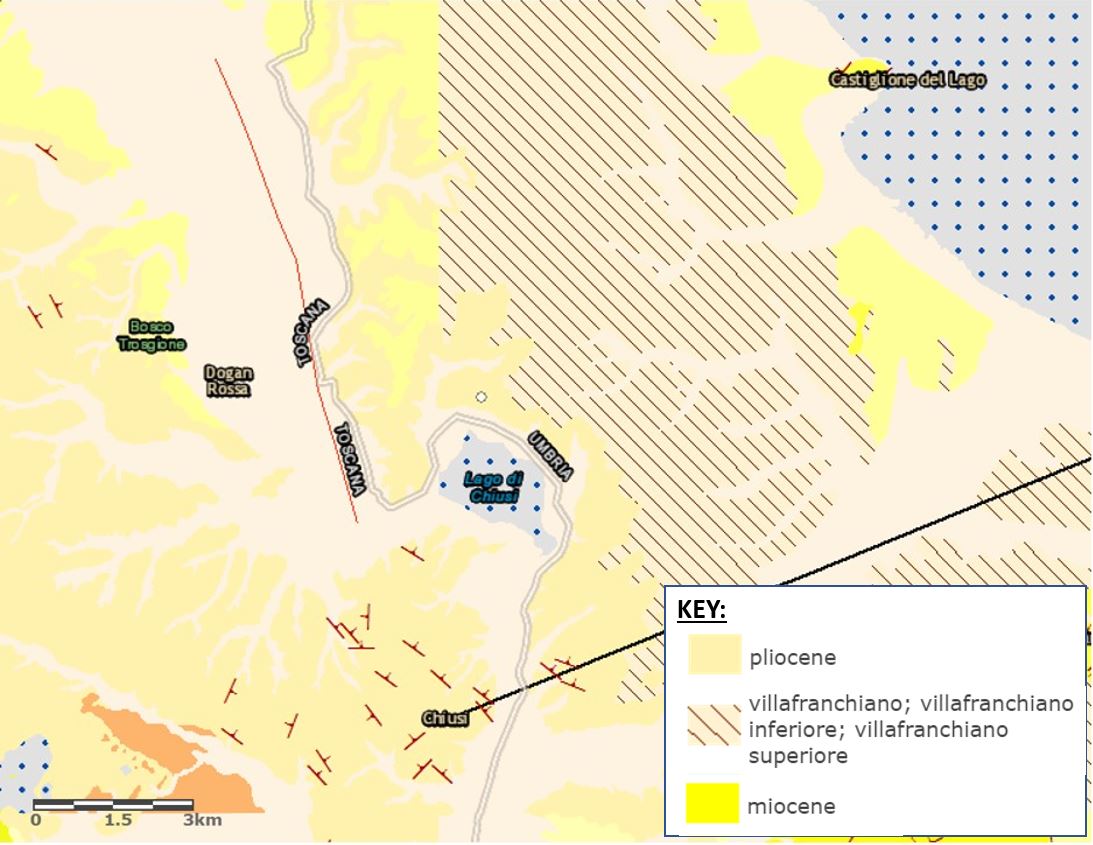
Site Gioiella-Vaiano, located at UTM 33T E2272744.942 N4773224.673 (standard point within research area), contains a roman villa and bathhouse. It is important to understand where building materials originate when looking at a site, as the knowledge can be useful when studying the building practices of the Roman inhabitants. Figure 1 shows the location of our site in the context of the age of the surrounding rock. The site sits atop bedrock from the end of the Pliocene era, which concluded around 3 Ma. The era was characterized as a warm period, when the world’s oceans where between 20-30 meters higher than they are today[i]. The majority of central Italy was submerged in a shallow sea, with a climate similar to that of the Bahamas. The environment was perfect for forming carbonates (limestone, dolomite), which are some of the popular building materials at the site. Limestone and dolomite are sedimentary rocks formed mostly by fragments of marine organisms. The shallow water location explains the appearance of sea shells at the site, likely belonging to snails or small crabs. However, many of the building materials are clearly volcanic in origin, and thus not from the immediate area surrounding the site. There are several volcanoes within a larger radius of the site. One of which is Mt. Amiata, around 34 kilometers from Gioiella-Vaiano. The origin of most of the igneous rock found around Mt. Amiata is from during the Middle Pleistocene period [ii]. An image of a mountain infront of the volcano from the site is featured in figure two. Therefore, most of the materials used at the villa at Gioiella-Vaiano can be either local or from the area surrounding Mt. Amiata, and the appearance of shells in the area is to be expected.
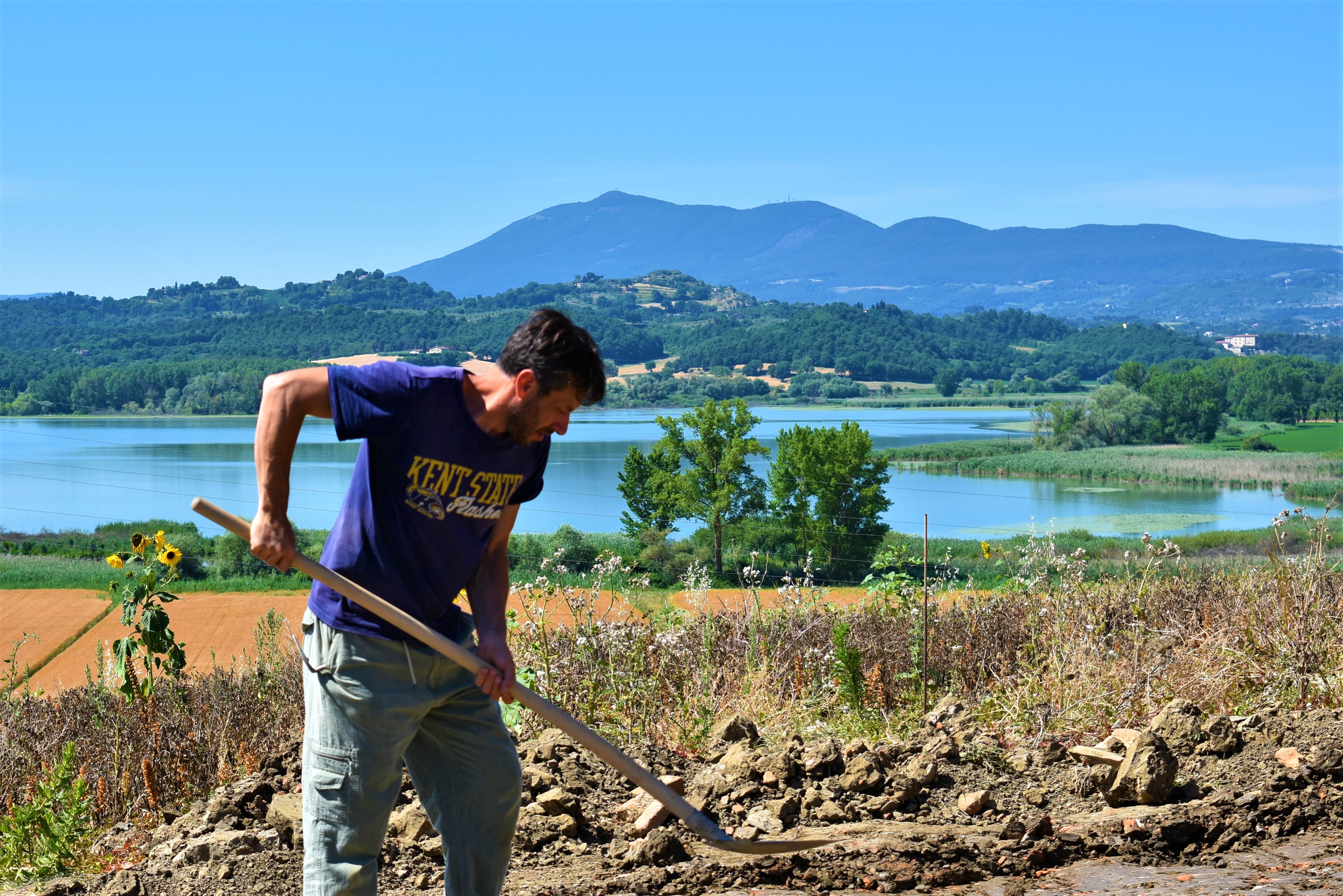
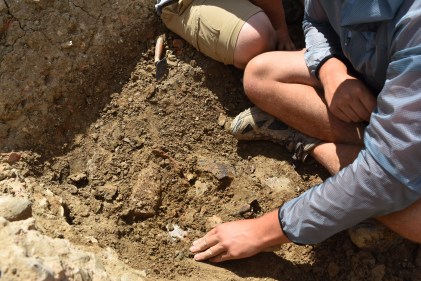
Figure 3 shows a map of the soils in the area. The soil found at the site is mostly clay and sand, and is likely fertile. An image of the soil at the site can be seen in figure 4. The image shows some small pebbles in
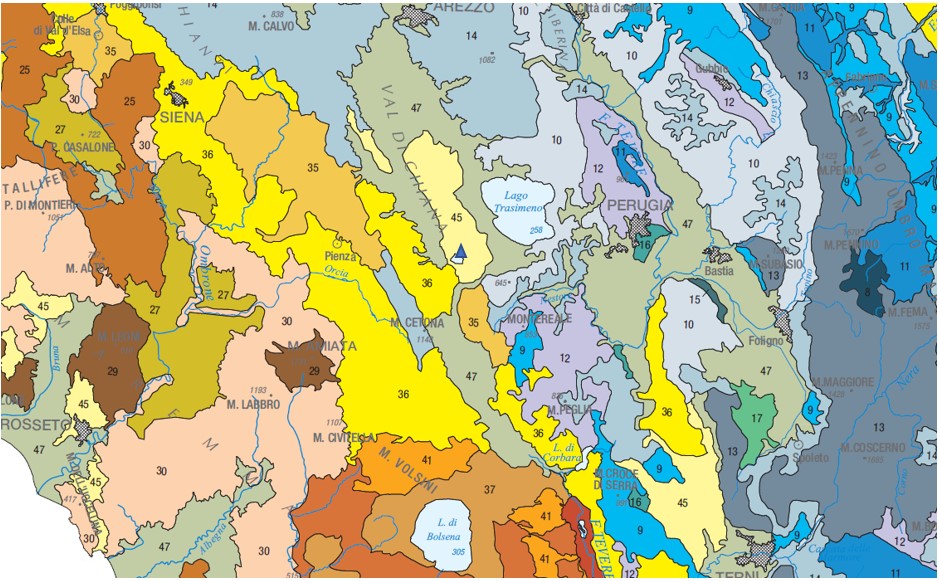
the clay; the soil has also been found to contain sand pockets. The clay is quite moist when digging, research suggests that this could be due to the heavy erosion which took place in the area during the Pleistocene Era that could have impaired soil drainage.[iv] The soil also contains pockets of iron deposits, appearing as red streaks. Costantini et al. (2006) states
that iron is common in rock formed in the late Pliocene era, and based on the type of soil found at the site, the iron is likely from a hematite or a goethite. The natural moistness of the clay, along with the evidence of a grindstone and a mill, suggest that farming took place around the villa. However, the nearby Chiana River Valley is also incredibly fertile and controlled by the city of Chiusi. The villa is believed to have been under the control of wealthy aristocrats from the city of Chiusi and thus may have benefited from the agriculture and livestock farmed in the valley. The villa also may have supported the city of Chiusi in the event of overpopulation or an issue with farming in the river valley.
 TRAP
TRAP 
Leave a comment